
Could earning a commercial drone pilot certification turn your interest in aerial technology into paid work? A remote pilot certificate can qualify you to conduct many business-related drone operations, but certification alone does not create a career. Your earning potential will depend on the industries you serve, the technical skills you develop, the equipment you operate, and your ability to deliver useful data rather than simply fly an aircraft.
What Commercial Drone Certification Allows You To Do
Most paid or business-related flights involving drones under 55 pounds are governed by Part 107. This applies whether you are operating an independent drone business, flying for an employer, inspecting property for your existing company, or producing aerial images for a client.
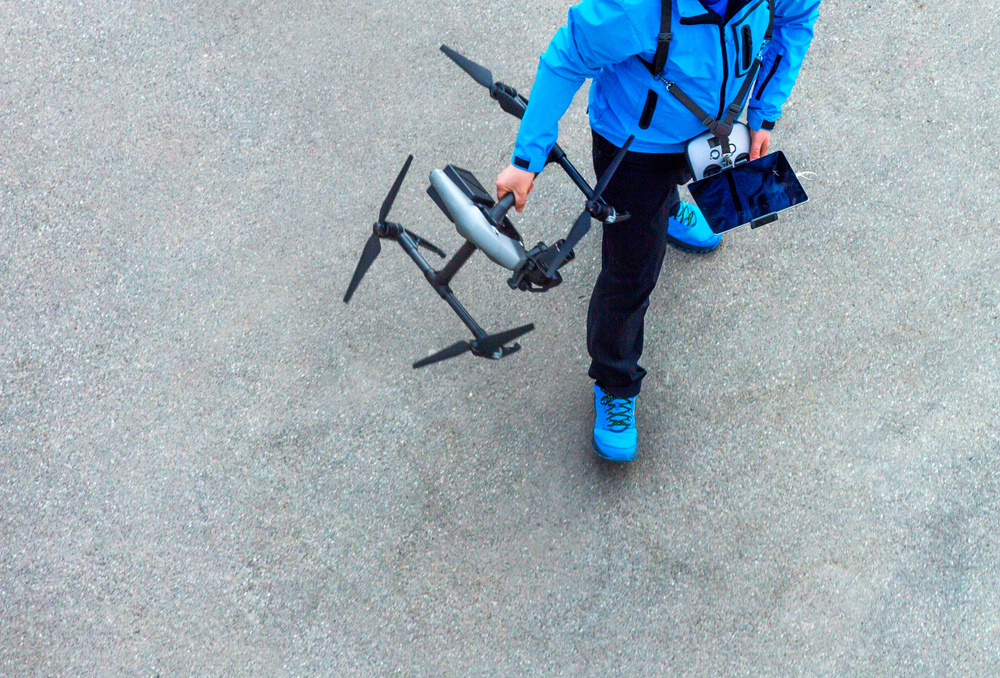
A remote pilot certificate confirms that you understand airspace classifications, weather, operating limitations, emergency procedures, airport operations, nighttime flying, and other safety requirements. The Federal Aviation Administration requires first-time applicants to be at least 16 years old, understand English, be physically and mentally capable of operating safely, and pass the Unmanned Aircraft General–Small knowledge test.
The certificate does not give you unrestricted access to the sky. Controlled airspace may require authorization, certain operations require waivers, and local rules may limit takeoff and landing locations.
Completing the Certification Process
The process begins by creating an Integrated Airman Certification and Rating Application account and obtaining an FAA Tracking Number. You then schedule the knowledge test at an approved testing center. After passing, you submit the remote pilot application electronically and complete a security background review.
Knowledge Test Topics
- Airspace classifications and flight restrictions
- Aviation weather and aircraft performance
- Emergency and radio procedures
- Preflight inspections and maintenance
- Nighttime operating requirements
The amount of preparation needed depends on your familiarity with aviation concepts. Someone who already understands sectional charts and weather reports may prepare within a few weeks. A new pilot may need longer to become comfortable with airspace symbols, airport traffic patterns, and operational rules.
Existing Part 61 pilots with a recent flight review can complete an online drone-specific course rather than take the standard initial knowledge test.
Accounting for the Full Startup Cost
The certification test is only one part of the financial commitment. You may also need an aircraft, extra batteries, memory cards, replacement propellers, software subscriptions, liability insurance, and a computer capable of processing large image or mapping files.
A basic photography setup can be relatively accessible, while a thermal inspection or mapping operation may require considerably more capital. Specialized cameras, survey-grade positioning systems, and data-processing platforms can cost more than the drone itself.
Your aircraft must also be registered for Part 107 operations. Registration currently costs $5 and remains valid for three years. Before buying equipment, identify the service you intend to provide. Purchasing an expensive enterprise drone without a defined customer need can leave you paying for capabilities that generate no additional revenue.
Identifying Career Paths With Practical Demand
Commercial drone pilot certification can support employment or contract work across several fields. The strongest opportunities usually involve solving an operational problem rather than producing attractive aerial footage alone.
Potential Work Areas
- Construction progress documentation
- Roof, tower, and infrastructure inspections
- Real estate photography and video
- Agricultural imaging and crop monitoring
- Surveying and geographic data collection
- Emergency response and public safety support
Construction companies may need repeatable images showing site conditions over time. Utility operators may use thermal cameras to identify possible equipment problems. Mapping firms may need pilots who can collect consistent data for photogrammetry software. Real estate work can be easier to enter, but pricing pressure may be greater because many pilots can produce basic photos and video.
Some positions combine drone operation with another profession. A survey technician, claims adjuster, engineer, or building inspector may use certification to expand an existing role rather than work solely as a pilot.
Developing Skills Beyond Flight Control
Employers and clients generally care more about the final deliverable than the act of flying. Smooth control and safe operations are essential, but they are only the foundation.
For media assignments, you may need experience with composition, camera settings, video editing, and color correction. Mapping work can require photogrammetry, geographic information systems, ground-control methods, and accurate flight planning. Inspection work may involve thermal imaging, asset documentation, or industry-specific reporting.
A pilot who can deliver an organized roof-inspection report may provide more value than one who simply hands over hundreds of unsorted photographs. Building expertise around a particular industry can also make your services harder to replace.
Working Within Operational Restrictions
Part 107 generally requires the drone to remain within visual line of sight. Some flights from moving vehicles, beyond visual line of sight, or under other restricted conditions may require a waiver supported by detailed safety procedures.
Night operations are permitted when the pilot has completed the required training and the aircraft has anti-collision lighting visible for at least three statute miles. Flights over people and moving vehicles are allowed only when the aircraft and operation meet the applicable risk-based category requirements.
These rules affect which jobs you can accept. A simple property shoot may fit comfortably within standard operating limits. A large infrastructure project, crowded event, or long-distance pipeline inspection may require additional planning, authorization, equipment, or regulatory approval.
Building Experience That Leads to Paid Assignments
A certificate demonstrates regulatory knowledge, but clients may still expect proof that you can complete a mission reliably. A focused portfolio can show flight quality, data consistency, and familiarity with the type of work you want to pursue.
Instead of assembling unrelated scenic footage, create sample projects that resemble paid assignments. You might document a construction site from repeatable positions, produce a basic roof-condition report, or create a small orthomosaic map using legally captured imagery.
Keep flight logs, maintenance records, checklists, and copies of relevant authorizations. Professional operating habits can strengthen job applications and reassure clients that you treat safety, privacy, and equipment reliability seriously. Liability insurance may also be required by commercial clients even when it is not mandated for every flight.
Turning Certification Into Long-Term Career Value
Commercial drone pilot certification is most valuable when it supports a broader professional capability. The certificate itself is permanent unless revoked, but you must complete online recurrent training every 24 calendar months to maintain current aeronautical knowledge. The FAA currently provides that recurrent training at no cost.
As equipment becomes easier to operate, routine flight skills may become less distinctive. Knowledge of mapping, inspections, imaging, regulations, data analysis, and client operations can provide greater durability. You may begin with entry-level photography or site documentation and gradually move toward technical projects that require specialized sensors or reporting.
A commercial drone career is therefore built less around owning an aircraft and more around producing accurate, useful, and safely collected information. Certification opens the airspace needed to begin that work, while practical expertise determines how far the opportunity can develop.